
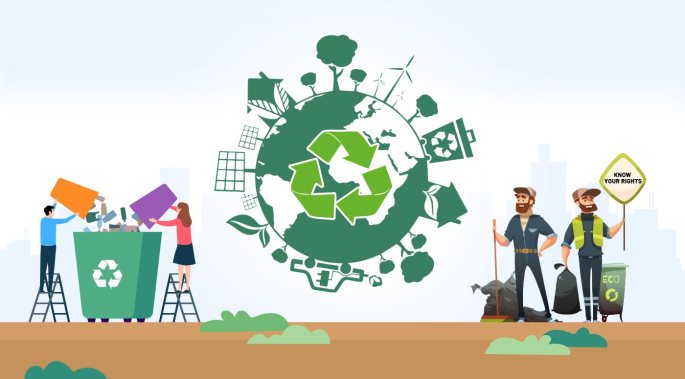
We only have around 11 years to prevent irreversible damage caused by global warming. We are the last generation that can potentially stop permanent damage to Earth. Fast-growing population, urbanization and industrial activities have all led to a significant deterioration in the quality of the environment. If the situations are so dire, then why are we still not taking our planet seriously?
Since we use Earth’s resources to sustain, it is also our duty to protect it. When every citizen does their part, only then can we bring a change. These steps may seem small but will help in the longer run.
- Reduce your carbon footprint. Carbon footprint is described as the cumulative emissions produced by an individual, event, organization, or product.
You can reduce your carbon footprint by:
-
- Avoiding or eating less meat. Greenhouse gases emitted by agribusiness is more than fossil fuels. Especially red meat, it utilises 11 times more water and generates 5 times more emissions.
- Unplug your devices. Even though your device is not consuming energy it is still drawing it. Thus, plugged devices contribute to the carbon footprint.
- Use public transport.
- Do not buy fast fashion. Usually retailers mass produce clothes at cheap prices. As trends change, people discard these cheap clothing items, thus contributing to the excessive filling of landfills.
- Plant a garden. Community gardens, vertical gardens can be done even if you live in a small apartment.
- Avoid using a dryer and instead line-dry your clothes. A dryer uses 5 times more electricity than a washing machine.
Get to know your local environment. Figure out the environmental issues in your area and try to resolve them. Afroz Shah, a lawyer did just that. Afroz and his neighbour were fed up with waste at Versova beach. Wanting to bring a change, they started cleaning up the beach themselves. Every weekend he along with many volunteers cleaned the beach. Their hard work paid off, as every month less litter appears.
The above steps we can follow at an individual level. We have the environmental law in India which aims to provide people with a clean environment.
Some of the more famous Environmental Movement in India are:
- The Bishnoi Movement
- Chipko Movement
- Save Silent Valley Movement
- Jungle Bachao Andolan
- Appiko Movement
- Narmada Bachao Andolan
- Tehri Dam Conflict
These Environmental Movements in India bring focus on ecological issues, which otherwise would have gone unnoticed. You can read more about these movements here.
The environmental acts in India are as follows:
- Fundamental Human Rights: Every citizen has the fundamental right to an environment which is satisfactory enough for their health and well being
- Inter-generational Equity: States shall maintain and utilise the environment and natural resources for the benefit of not only the present but also the future generations.
- Conservation and Sustainable Use: The environmental law in India also mentions that States shall maintain ecosystems and ecological processes which are essential for the functioning of the biosphere. They shall conserve biological diversity and shall observe the principle of optimum sustainable yield.
- Environmental Standards and Monitoring: States shall establish sufficient environmental protection measures. The environmental rights in India require the state to monitor changes in and publish related information on environmental quality and resource use.
- Prior Environmental Assessments: States shall make environmental assessments of recommended activities which may affect the environment or natural resources.
- Prior Notification, Access and Due Process: According to the Environmental rights in India, States shall notify in a timely manner to every citizen who is likely to be affected by a planned activity. They have to grant them equal access in administrative and legal proceedings.
- Sustainable Development and Assistance: States shall ensure that conservation is treated as an essential part of the planning and implementation of development activities. They will provide assistance to other states, especially to developing countries, in support of environmental protection and sustainable development.
- General Obligation to Co-operate: States shall co-operate in good faith with other states in implementing the preceding rights and obligations, mentions the Environmental Act in India.
An actual change can only be brought when the Government along with people start working for a cleaner Environment and healthier future. When we use natural resources we should keep our future generations in mind.

 TaxoLawgy