What to do in case an official refuse to lodge an FIR?

Section 154 of The Code of Criminal Procedure deals with registration of First Information Report (though the Section does not use the word ‘First Information Report or FIR). Know your rights on how to file an FIR in India, procedures of filing an FIR both through physical and online FIR filing system. Know everything about filing FIR in India and how to escalate the situation if any official refuses to file a complaint.

How to file an FIR in India?

One can do online FIR registration or online police complaint about cognizable crimes. Non-cognizable crimes require submitting a complaint to the magistrate. The magistrate, in turn, directs police for action.

A “cognizable” crime covers for example murder, rape, rioting, dacoity, etc. These are the crimes where arrest can be made without a warrant. A “non-cognizable” crime covers cheating, fraud, etc. There is a difference between an FIR and a complaint.

A First information report is the report of crime or civil issues that the police receive first in point of time. The commission of the crime or the police has the right to arrest without warrant and can start the investigation. The complaint refers to an appeal made to the magistrate, comprising an allegation that a crime has taken place.

You can file FIRs online. You can always find relevant information and get contact information from each State’s Human Rights Commission office. It can be through the website of the National Human Rights Commission ​http://nhrc.nic.in Moreover, it is not necessary to go to the police station if the police ask you to visit, unless the police are arresting you on criminal grounds.

Grounds for the arrest of a citizen

Police can summon you to the police station in case you are a witness, suspect or have a perceived part in the crime. The police cannot take you with them while you are walking outside or you are at home if you haven’t done anything illegal. Unless they have a substantial reason, you have the right to refuse to go with them anywhere.

Police can only question a woman or children under 15 years in their homes. They don’t have to visit the police station.

Let us summarize how you can file FIR in India (First Information Report). Register your complaint at the nearest police station. It can be done at the locality where the offence is allegedly committed, or where the victim resides or carries on business.

The concerned police officer in the police station may register an oral FIR. One can make a written complaint. Which is then converted to the FIR format.

The concerned Police officer, after recording the FIR in the prescribed form, will explain the contents of the said FIR. The complainant then has to sign over in the said recorded FIR.

The Police are obliged to give FIR to the complainant. It should be noted that an FIR can even be registered by a person who is alleged to have committed a crime.

What steps to take if the police refuse to register an FIR?

Send your complaint in writing to the Superintendent of Police (SP) through registered post.

Send a complaint to the concerned State Human Rights Commission or the National Human Rights Commission. Mention that the police are not enforcing the law or that they are being negligent and corrupt.

It is a crime to refuse to file FIR in India.

Refusal to lodge an FIR on jurisdictional ground amounts to 1 year of Imprisonment for the Police officials.

A petition can be filed and submitted to the Chief Justice of the concerned High Court / Chief Justice of India, Supreme Court. It requests to take Suo Moto Cognizance of the alleged contempt of the court. A copy of the letter is also sent to the concerned police officer. One can check for the status of the petition through an application under the Right to Information (RTI).

How to escalate your complaint?

Know that you can:

  • Complain to the superintendent of police
  • Approach to a judicial magistrate with your plea
  • File the writ petition
  • Complain to the state and national human rights commission.

You can write the complaint of your case and can send it by post to the senior officer of the police, Commissioner of Police or Superintendent of police. First, the superintendent analyses the complaint. Then sent to the High Court Chief Justice of the State.

A copy of the online police complaint is sent to the Chief Justice of the High Court of the State once it is analyzed by the Superintendent of the police.

You may send a written complaint in the form of the letter to the Concerned judicial metropolitan magistrate. After analyzing the letter magistrate will decide whether to take cognizance or not. An informant may also send an application to the judicial magistrate.

You can even file a writ petition in the Hon’ble High Court for the issuance of a writ of mandamus against the defaulting police officer. To give the reason why he has not registered the FIR, and why he should not be suspended from his position of police service for interfering in the administration of justice and disturbing the accused person.

Right to Compensation

A citizen can ask for damages/compensation, for the frustration and for the deprivation of life and liberty under Article 21 of the Indian constitution.

You can file a case with the State human rights commission or National human rights commission in written form. You will mention that the concerned police officer is not doing his duty. Disregarding law. Stating the disregard for the victim’s problems that could create a situation of mental trauma or frustration for the victim.

If a police official misuses their power against less privileged or someone who cannot read or write, an Application u/s 156(3) or Criminal Complaint u/s 200 of CRPC, 1973, can be filed. Also filed orally before the competent magistrate.

But in the recent era, things have been changed now. Refusing to file FIR is an offence. Follow up the above guidelines and do not be silent on the crime. The one who is doing the crime is equally responsible as the one who is suffering from it.
Why does India need Aadhar Card – UID?

Does India Need Aadhaar Card?

You might already possess documents like Pan Card, passport, driver’s licence, etc. which help you in identification. So why do you need an additional document like the aadhar card? And what are the  benefits of aadhar card

What is an aadhaar card?

The Aadhaar card is a unique identification number which is connected with fingerprints and iris scan of the cardholder. UIDAI issues the aadhar card. It functions as a proof of identity and not of citizenship.

The code on the card is a 12-digit unique number which the UIDAI assigns to Indian citizens after they complete the verification process. Indian residents may voluntarily enrol to acquire an Aadhaar card regardless of their age, gender, religion, etc..

So, Why was the Aadhaar card introduced in India?

National databases can prove to be quite helpful in increasing the efficiency of administration. In India, there were several means of verifying identity, for eg., electoral identity card, income-tax PAN card, passport, ration card, driving license, etc. But they weren’t capable to handle a large population such as India’s.

The concept behind Aadhaar was to formulate a centralized system for India with one form of recognizable ID. Thus, reducing the use of birth certificates and ration cards which were prone to loss and damage. The old system also left marginalized people especially the rural poor struggling to obtain state services. Thus, the aadhaar card scheme was started in 2010 by the then PM Dr Manmohan Singh.

The basic intention of the card is the identification of citizens and giving them the terminal benefits of the government schemes.

Additionally,  people can use the aadhar card pan India as an identity card. They can also link it with bank accounts, insurance, and pension.

In the ruling of 2018, the Supreme court states that “Unique identification proof empowers and gives identity to marginalised sections of society.”

What is the importance of Aadhar Card?

  • According to Nandan Nilekani, the first UIDAI chairman, Aadhar card has helped the Government save about USD 9 billion. The unique aadhar number eliminates fakes and duplicates from the beneficiary and employee list. This helps in eliminating frauds in the financial distribution system.
  • The use of biometrics gives a unique identity to every citizen of India.
  • Another benefits of aadhar card is that people can use the Aadhar card instead of multiple documents for official work.
  • The ‘Jhan Dhan Yojana,’ scheme, uses Aadhar as the main document evidence, to open up a bank account.
  • Aadhar card also allows the holder to avail of all government subsidies that they are eligible for.
  • With the use of an Aadhar Card, the process of acquiring a passport can be now speeded up. People can apply online for passports by simply attaching their Aadhaar Card as the residence and identity proof along with their application instead of uploading multiple documents.
  • People can now get their pension without leaving the comforts of their homes. As agencies can obtain their details through their Aadhar Card numbers.
  • Individuals who link the Aadhaar number to their LPG ID can avail the LPG subsidy directly in their respective bank accounts.

These benefits establish the importance of aadhar card. Thus, India needs an Aadhar card.

Online tax payment in India

Technology makes it easier to complete important mundane tasks from the comforts of your home. One such task is of income tax payment. The taxation system in India has made it easier to pay income tax using the online tax payment in India. Thus, more citizens are filing their returns thereby contributing to the national development.

Also, some citizens have a few queries, like:

  1. What are the Benefits of Online Tax Collection In India?
  2. How you enjoy the benefits of Digital India as an Indian Citizen?

Benefits of Online Tax Payment in India

  • To begin with, you can pay tax from anywhere in the country
  • Pay taxes anytime; i.e. 24*7*365
  • Furthermore, one can pay taxes on behalf of a firm or company
  • There is no need to submit a physical challan
  • Additionally, you also receive the cyber receipt instantly.

Taxes paid through Online payment in India 

  • Income-tax
  • Corporate tax (i.e. income-tax paid by a company)
  • Tax deducted at source (TDS)
  • The tax collected at source (TCS)
  • Securities Transaction Tax (STT)
  • Wealth Tax
  • The gift tax, expenditure tax, and other direct taxes

Documents Needed for Filing Income Tax Returns in India

  1. Choosing the applicable ITR form
  2. Linking Aadhaar with PAN
  3. For Salaried Employees
  4. Documents related to interest income
  5. Form 26AS
  6. Section 80 for Investments
  7. Other Investment Documents
  8. Documents Required to Claim the Expenses as Deduction.
income tax payment

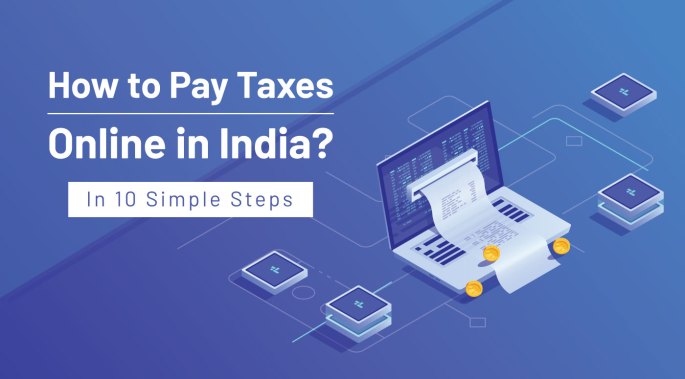
Step by Step Guide to Online Tax Payment

  1. Visit the online tax e-payment website
  2. Enter the website of online tax payment. Then, open the corresponding Challan based on your payment type
  3. Choose suitable Challan and provide accurate details
  4. Select the bank from the drop-down for online income tax payment
  5. Next enter the verification code appearing on the screen
  6. Then click on the proceed button
  7. A new page with the details provided by the taxpayer in the Challan will appear. It has the name of the taxpayer according to the database of the Income-tax Department
  8. Ensure that the name and other details are correct. Then proceed towards payment by clicking on the ‘Submit to Bank’ button.
  9. After completing the transaction, the screen will display the receipt of payment
  10. The receipt will contain the Challan Identification Number (CIN) and other data. Additionally, taxpayers should preserve the hard and the soft copy of the Challan for the record.

Challan Check

Challan Check is easily conducted by a taxpayer. Below details are accessible by entering the CIN and amount:

  • BSR Code
  • Date of Deposit
  • Challan Serial Number
  • Major Head Code with description
  • TAN/PAN
  • Enter the Name of Tax Payer
  • Received by TIN on (that is the date of receipt by TIN)
  • Do the verification that the amount entered is accurate 

TAN Based Check

Get a quick look at TAN based check, Challan Tender Date range for the particular year. Thus, one can proceed to the following details:

  • CIN
  • Major Head Code with description
  • Minor Head Code
  • Nature of Payment

An individual or a business entity can simply pay their taxes using the taxation system in India. The online tax collection in India is a convenient system. It is easy to regulate. Additionally, it attains maximum taxpayers through the online payment system. Thus, an individual or a business entity can easily contribute to national development from the comfort of their home or office.

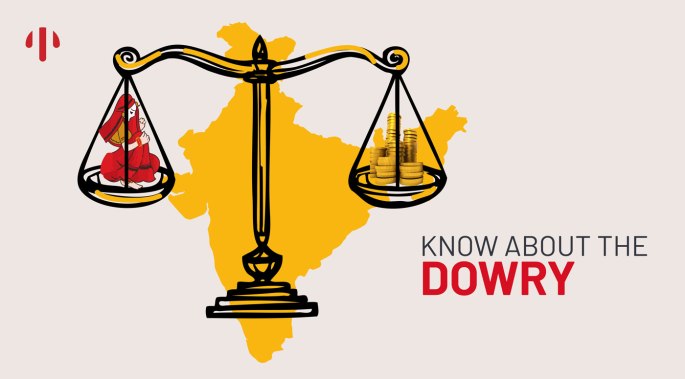
Know about the Dowry System in India – Act and Procedure

We are excited for our wedding bells. That beautiful bridal dress, that pretty henna in hands, the glittering jewellery, the scented garland seems like a pretty fairy tale which she wants to see as a reality and enjoy every second of her married life. The dowry system in India or ‘Dahej Pratha’ is one of the most crucial phenomena in Indian marriages. Some of us want to know ‘Dahej’ meaning in English i.e. dowry and it is prevalent in Indian society for ages. It is a practice of exchange of material possessions, property and jewellery to be offered or asked by the groom’s family.

Do we ever wonder what all she loses?

Her family, her cupboard, her bed, her room and most importantly her surname. She gives away everything and is ready to come at your home only and only for you.
Isn’t it your responsibility to keep her protected, safe and make her smile every second.

Sometimes this happiness becomes small compared to the horror one ends up facing.

Objective of Marriage

Any discussion on marriage must begin with an honest recognition of your primary goal. The goal is your happiness and prosperity, and nothing that any parent, uncle, aunt, friend has to say about it has any agency over your own awareness of what brings you contentment.

Living together in the subcontinent encouraged us to adopt each other’s customs, and eventually, they became a part of ours.

This isn’t one of those blogs about the social nuisance about weddings nor it encourages divorce or live in relationships.
Whether we like it or not, all of us have come across Star Plus soap advertisement in between our favourite serials. This blog is also something that will make you think about the sad life of a few people after marriage.

The Never-ending dramas around new brides. Their unbearable miseries and the constant struggle to settle into the new family. These are a few constant outcomes of a marriage based on Dowry System in India or ‘Dahej Pratha’. We can take a look at the problems and the solutions.

Getting to know the Dowry

How does Dowry system in India or ‘Dahej Pratha’ works? Dowry, in simple words is the money, goods, or estate that a woman brings to her husband or his family in marriage.

Dowry is a conditional for the Wife. Which is supposed to be of the woman in case of divorces, abuses or assault.

Jewellery and property possessions have been used in dowry which is frequently inalienable by the husband. Though husband may otherwise benefit from them it is basically a protection for the woman.

Wondering, where all the love is gone?

What about education?

All in vain?

Yes, it happens. Many people marry for Dowry in India.

The Dowry system was eradicated from the Europe in the 19th and 20th Century. Other countries saw rise in Dowry popularity by the end of the 20th Century, even after declaring illegal or discouraged by governments.

In South Asia, parents of the groom demand compensation for their son’s higher education and future earnings that would be shared by the bride.

Few cases which proves Dowry exists:

  • A woman apparently beaten to death by husband and in-laws over dowry. The incident took place in Balheda village in neighbouring Shamli district, police said.
  • Demand of additional dowry of Rs 25 lakh, which resulted in assault by the family of the husband against a pregnant woman
  • Married woman was allegedly beaten to death following a dispute over dowry in Kolkata.
  • Husband with other in-laws thrashed wife allegedly for dowry, ANI reported. The incident took place in Haryana’s Faridabad and a video of the incident has gone viral on social media.

I think these reports are enough that will make us to look into the case again. Reports from metro cities like Kolkata, Mumbai, Chennai makes it clear that it exists among well educated people as well.

THE DOWRY PROHIBITION ACT, 1961, (Act No. 28 of 1961)

Any property or valuable asset shared by one party to another party who is in a marriage consideration. Which takes place either before the marriage, during or after the marriage according to the Dowry system in India also known as ‘Dahej Pratha’.

After the commencement of this Act, if any person gives, takes or abets the giving or taking of dowry, he/she shall be punished with imprisonment of 5 years or a fine of more than fifteen thousand or the dowry amount whichever is higher.

Under the act against Dowry System in India, demanding of dowry directly or indirectly, from the parents, relatives or guardians of a bride or bridegroom shall be punishable. The punishment may include imprisonment from six months to two years and or imposed with a fine of up to ten thousand rupees.

One can complain if it is Abetment to suicide, dowry murder, cruelty, fraud or dowry torture.

How to file a complaint?

A victim, parents or an organization can file a complaint in the court of the Metropolitan Magistrate or a first-class Magistrate.

A complaint can be made in the police station or in the ‘Crime against women Cell’. They can investigate into the matter and report to court. Then court takes the matter ahead. (Cognizance is a notice or acknowledgement on which a judge is bound to act).

The Metropolitan Magistrate or a Magistrate of the first class may take cognizance himself if such facts come to his own knowledge.

Every offence under this Act is a non-bailable and non-compoundable offence (that which cannot be compromised or settled out of court, between the complainant and the accused, at any stage of the trial). One can approach the right medium and strike against the Dowry System in India.(Dahej)

Women use it as a weapon but what about men?

There is no provision for Domestic Violence to protect a man. Consequently, many women have been misusing the law against their husbands to harass them. Even the government has failed to take necessary steps to address violence against men.

Section 498A of Indian Penal Code, books husband and family against cruelty to woman. Usually, resulting in immediate arrest with proper investigation and punished with non-bailable terms. In false cases, the husband and his family is considered accused till they are otherwise proven innocent.

Three years is the maximum punishment for the guilty.

In case of false complaints against you by your wife, you have two alternatives – defend your allegation and hold on for the judgement or do a counter case against your wife and prove her wrong.

  • Record conversations (whether voice, chat, email, letters, etc.) and keep them safe. Keep every evidence secured and safe. It should not be in front of anyone who is not an authority.
  • Collect evidence of not demanding dowry or any kind of activity related to torture
  • Collect evidence to present that the female has moved out of marriage bonds without any consent
  • This evidence will be fruitful in the time of getting anticipatory bail or notice bail from the court.

Summarizing the Issue

Write letters to the media, human rights organizations, etc., telling them about the use and misuse of Section 498A.

Use social media platform for reaching the masses. It will be helpful in seeking attention from the society towards the misuse of the law.

Not all men are the same, some may be the sufferers as well. Their eyes also shed tears; pain can also be real. They become the sandwich between two superheroes of his life one her mother another her wife. Please stop stereotyping and fight for the right not only for male dominated society or feminism.

Although the violence against women is more prevailing the Dowry System in India (Dahej Pratha) is the cause for destruction of many families and households. Eradicating the dowry system in India is the only alternative to a better society and healthier relationships based on happiness and prosperity.

How to save income tax in India?

How to save income tax in India?

Often, people end up paying taxes more than they should because of lack of awareness. If you file your own taxes it is quite possible that you might commit the same mistake. This blog discusses the best tax saving funds in India and different ways of how to save income tax in India.

ELSS  Mutual Funds

This remains the best tax saving mutual funds in India despite the introduction of the tax on long-term capital gains from equity funds. The 10% of the tax is applicable only on the gains beyond Rs 1 lakh. Routine collection of capital gains can decrease the liability to a great extent. It also provides the highest returns among other 80C options. ELSS funds have the lowest lock-in of about 3 years and the return of the past three years has been 9.78%.

There are other problems present as the Equity markets were unpredictable last year and 2019 may not be any different. The economy has slowed down. This should not worry the long-term investors who stagger their purchases and average out their costs through monthly SIPs. But the SIP window is not applicable for taxpayers who have to show proof of Section 80C tax-saving investments in a few days.

“A lot of taxpayers are eager to invest in ELSS funds but we don’t want them to invest recklessly. If a first-time investor loses his/her money, they remember it for a lifetime and would stay away from the equity for a long time.” Says Shweta Jain, CEO, and Founder, Investography a Bengaluru – based financial advisory firm. She advises taxpayers to not put a large sum into ELSS funds at one go, distribute it over 2-3 tranches before the 31st March deadline.

It should be noted that the risk is equal with all ELSS funds. Some invest more in small and mid-cap stocks while others invest more in large-cap ones. As the ELSS provides numerous benefits, it is currently the best tax saving mutual funds in India.

The best ELSS funds

TURBO-CHARGED

National Pension Scheme

At the time of retirement, 60% of the corpus is tax-free. People can keep investing in NPS until the age of 70. They can also stagger their withdrawals.

Additionally, investors can also allocate 75% to investments in the active choice option of the National Pension Scheme. Even though short-term returns may not seem very beneficial, in the long run, investors earn double-digit returns. Return of NPP has been 10.84% in the past five years.

“According to experts, NPS is the better alternative to PPF and bank deposits.”

National Pension Scheme helps people save income taxes in 2 ways:

People can declare contributions of up to 1.5 Lakh INR as a deduction under section 80C.

Furthermore, 50,000 INR can be deducted under 80 CCD(1b), Employers can deposit 10% of the salary of employees in NPS. The capital will not be taxable.

Public Provident Funds (PPF)

PPF funds is a savings fund provided by the Indian Government. The government pays the interest. The interest rate for PPF is 8 %.

In PPF helps save income tax by making the interest completely tax-free. Whereas in fixed deposits interest is taxable. Thus, advisors prefer PPF over fixed deposits. Public provident funds are also an easy investment and score high in terms of safety.

You can easily open an account in any post office branch. Some private banks also offer PPF.

Tax deductions for employed workers:

The income tax department allows multiple income tax exclusions for salaried employees. This proves to be very effective in saving taxes. To avail these benefits, workers have to inform their employers in advance.

The various income tax exclusions for salaried workers are listed below:

  1. HRA exemption for salaried employees.
  2. Income tax exemption on leave travel allowances.
  3. Exception on encashment of holidays for salaried employees.
  4.   4.Tax exemption from pension income.
  1. IT exemption on gratuity for salaried employees.
  2. Income tax exemption on VRS received.
  3. IT exemption for perquisites.
  4. Exemption of various allowance.

Loans to claim tax deductions

Home loans are a great way to save taxes. Under section 24, not only the principal repayment but also the interest is tax-free.

For self-occupied homes, the tax deduction limit is INR 2 lakhs. Although, if the property is rented out the interest goes tax-free. Moreover, first-time owners get additional INR 50,000 reduced under section 80E.

Higher education is increasingly becoming expensive. Education loans that are taken for spouses, offspring, or for students whose guardians are taxpayers are eligible for tax-free interest under section 80E. This reduces a huge burden on taxpayers. The loans must be taken from either a charitable or financial institute.

Health Insurance

A simple way of saving income tax is through buying health insurances. Tax deductions can be made on the premium of the health insurances under section 80D. If you pay health insurance for yourself or for dependent family members the tax reduction is around 25,000 INR. For senior citizens, the tax reduction is 50,000 INR. If you pay a premium for dependent senior citizens then you receive an additional tax reduction of 50,000 INR. In this manner, you can save 1 lakh INR in tax reductions.

These are the easiest and most profitable ways in which you can save income tax and enjoy your rights while exercising your responsibilities simultaneously. Make sure before you invest anywhere you consult an expert to ensure your investment is safe.

environmental acts in india

Know your rights for the environment and how you can contribute to stop global warming?

We only have around 11 years to prevent irreversible damage caused by global warming. We are the last generation that can potentially stop permanent damage to Earth. Fast-growing population, urbanization and industrial activities have all led to a significant deterioration in the quality of the environment. If the situations are so dire, then why are we still not taking our planet seriously?

Since we use Earth’s resources to sustain, it is also our duty to protect it. When every citizen does their part, only then can we bring a change. These steps may seem small but will help in the longer run.

  • Reduce your carbon footprint. Carbon footprint is described as the cumulative emissions produced by an individual, event, organization, or product.

You can reduce your carbon footprint by:

    1. Avoiding or eating less meat. Greenhouse gases emitted by agribusiness is more than fossil fuels. Especially red meat, it utilises 11 times more water and generates 5 times more emissions.
    2. Unplug your devices. Even though your device is not consuming energy it is still drawing it. Thus, plugged devices contribute to the carbon footprint.
    3. Use public transport.
    4. Do not buy fast fashion. Usually retailers mass produce clothes at cheap prices. As trends change, people discard these cheap clothing items, thus contributing to the excessive filling of landfills.
    5. Plant a garden. Community gardens, vertical gardens can be done even if you live in a small apartment.
    6. Avoid using a dryer and instead line-dry your clothes. A dryer uses 5 times more electricity than a washing machine.

Get to know your local environment. Figure out the environmental issues in your area and try to resolve them. Afroz Shah, a lawyer did just that. Afroz and his neighbour were fed up with waste at Versova beach. Wanting to bring a change, they started cleaning up the beach themselves. Every weekend he along with many volunteers cleaned the beach. Their hard work paid off, as every month less litter appears.

The above steps we can follow at an individual level. We have the environmental laws in India which aim to provide people with a clean environment.

Some of the more famous Environmental Movement in India are:

  1. The Bishnoi Movement
  2. Chipko Movement
  3. Save Silent Valley Movement
  4. Jungle Bachao Andolan
  5. Appiko Movement
  6. Narmada Bachao Andolan
  7. Tehri Dam Conflict

These Environmental Movements in India bring focus on ecological issues, which otherwise would have gone unnoticed. You can read more about these movements here. 

The environmental acts in India are as follows:

  • Fundamental Human Rights: Every citizen has the fundamental right to an environment which is satisfactory enough for their health and well being
  • Inter-generational Equity: States shall maintain and utilise the environment and natural resources for the benefit of not only the present but also the future generations.
  • Conservation and Sustainable Use: The environmental laws in India also mentions that States shall maintain ecosystems and ecological processes which are essential for the functioning of the biosphere. They shall conserve biological diversity and shall observe the principle of optimum sustainable yield.
  •  Environmental Standards and Monitoring: States shall establish sufficient environmental protection measures. The environmental rights in India require the state to monitor changes in and publish related information on environmental quality and resource use.
  •  Prior Environmental Assessments: States shall make environmental assessments of recommended activities which may affect the environment or natural resources.
  •  Prior Notification, Access and Due Process: According to the Environmental rights in India, States shall notify in a timely manner to every citizen who is likely to be affected by a planned activity. They have to grant them equal access in administrative and legal proceedings.
  • Sustainable Development and Assistance: States shall ensure that conservation is treated as an essential part of the planning and implementation of development activities. They will provide assistance to other states, especially to developing countries, in support of environmental protection and sustainable development.
  • General Obligation to Co-operate: States shall co-operate in good faith with other states in implementing the preceding rights and obligations, mentions the Environmental Act in India.

An actual change can only be brought when the Government along with people start working for a cleaner environment and a healthier future. When we use natural resources we should keep our future generations in mind.

Know about the Dowry System in India – Act and Procedure

We are excited for our wedding bells. That beautiful bridal dress, that pretty henna in hands, the glittering jewellery, the scented garland seems like a pretty fairy tale which she wants to see as a reality and enjoy every second of her married life. The dowry system in India or ‘Dahej Pratha’ is one of the most crucial phenomena in Indian marriages. Some of us want to know ‘Dahej’ meaning in English i.e. dowry and it is prevalent in Indian society for ages. It is a practice of exchange of material possessions, property and jewellery to be offered or asked by the groom’s family.

Do we ever wonder what all she loses?

Her family, her cupboard, her bed, her room and most importantly her surname. She gives away everything and is ready to come at your home only and only for you.
Isn’t it your responsibility to keep her protected, safe and make her smile every second.

Sometimes this happiness becomes small compared to the horror one ends up facing.

Objective of Marriage

Any discussion on marriage must begin with an honest recognition of your primary goal. The goal is your happiness and prosperity, and nothing that any parent, uncle, aunt, friend has to say about it has any agency over your own awareness of what brings you contentment.

Living together in the subcontinent encouraged us to adopt each other’s customs, and eventually, they became a part of ours.

This isn’t one of those blogs about the social nuisance about weddings nor it encourages divorce or live in relationships.
Whether we like it or not, all of us have come across Star Plus soap advertisement in between our favourite serials. This blog is also something that will make you think about the sad life of a few people after marriage.

The Never-ending dramas around new brides. Their unbearable miseries and the constant struggle to settle into the new family. These are a few constant outcomes of a marriage based on Dowry System in India or ‘Dahej Pratha’. We can take a look at the problems and the solutions.

Getting to know the Dowry

How does Dowry system in India or ‘Dahej Pratha’ works? Dowry, in simple words is the money, goods, or estate that a woman brings to her husband or his family in marriage.

Dowry is a conditional for the Wife. Which is supposed to be of the woman in case of divorces, abuses or assault.

Jewellery and property possessions have been used in dowry which is frequently inalienable by the husband. Though husband may otherwise benefit from them it is basically a protection for the woman.

Wondering, where all the love is gone?

What about education?

All in vain?

Yes, it happens. Many people marry for Dowry in India.

The Dowry system was eradicated from the Europe in the 19th and 20th Century. Other countries saw rise in Dowry popularity by the end of the 20th Century, even after declaring illegal or discouraged by governments.

In South Asia, parents of the groom demand compensation for their son’s higher education and future earnings that would be shared by the bride.

Few cases which proves Dowry exists:

  • A woman apparently beaten to death by husband and in-laws over dowry. The incident took place in Balheda village in neighbouring Shamli district, police said.
  • Demand of additional dowry of Rs 25 lakh, which resulted in assault by the family of the husband against a pregnant woman
  • Married woman was allegedly beaten to death following a dispute over dowry in Kolkata.
  • Husband with other in-laws thrashed wife allegedly for dowry, ANI reported. The incident took place in Haryana’s Faridabad and a video of the incident has gone viral on social media.

I think these reports are enough that will make us to look into the case again. Reports from metro cities like Kolkata, Mumbai, Chennai makes it clear that it exists among well educated people as well.

THE DOWRY PROHIBITION ACT, 1961, (Act No. 28 of 1961)

Any property or valuable asset shared by one party to another party who is in a marriage consideration. Which takes place either before the marriage, during or after the marriage according to the Dowry system in India also known as ‘Dahej Pratha’.

After the commencement of this Act, if any person gives, takes or abets the giving or taking of dowry, he/she shall be punished with imprisonment of 5 years or a fine of more than fifteen thousand or the dowry amount whichever is higher.

Under the act against Dowry System in India, demanding of dowry directly or indirectly, from the parents, relatives or guardians of a bride or bridegroom shall be punishable. The punishment may include imprisonment from six months to two years and or imposed with a fine of up to ten thousand rupees.

One can complain if it is Abetment to suicide, dowry murder, cruelty, fraud or dowry torture.

How to file a complaint?

A victim, parents or an organization can file a complaint in the court of the Metropolitan Magistrate or a first-class Magistrate.

A complaint can be made in the police station or in the ‘Crime against women Cell’. They can investigate into the matter and report to court. Then court takes the matter ahead. (Cognizance is a notice or acknowledgement on which a judge is bound to act).

The Metropolitan Magistrate or a Magistrate of the first class may take cognizance himself if such facts come to his own knowledge.

Every offence under this Act is a non-bailable and non-compoundable offence (that which cannot be compromised or settled out of court, between the complainant and the accused, at any stage of the trial). One can approach the right medium and strike against the Dowry System in India.(Dahej)

Women use it as a weapon but what about men?

There is no provision for Domestic Violence to protect a man. Consequently, many women have been misusing the law against their husbands to harass them. Even the government has failed to take necessary steps to address violence against men.

Section 498A of Indian Penal Code, books husband and family against cruelty to woman. Usually, resulting in immediate arrest with proper investigation and punished with non-bailable terms. In false cases, the husband and his family is considered accused till they are otherwise proven innocent.

Three years is the maximum punishment for the guilty.

In case of false complaints against you by your wife, you have two alternatives – defend your allegation and hold on for the judgement or do a counter case against your wife and prove her wrong.

  • Record conversations (whether voice, chat, email, letters, etc.) and keep them safe. Keep every evidence secured and safe. It should not be in front of anyone who is not an authority.
  • Collect evidence of not demanding dowry or any kind of activity related to torture
  • Collect evidence to present that the female has moved out of marriage bonds without any consent
  • This evidence will be fruitful in the time of getting anticipatory bail or notice bail from the court.

Summarizing the Issue

Write letters to the media, human rights organizations, etc., telling them about the use and misuse of Section 498A.

Use social media platform for reaching the masses. It will be helpful in seeking attention from the society towards the misuse of the law.

Not all men are the same, some may be the sufferers as well. Their eyes also shed tears; pain can also be real. They become the sandwich between two superheroes of his life one her mother another her wife. Please stop stereotyping and fight for the right not only for male dominated society or feminism.

Although the violence against women is more prevailing the Dowry System in India (Dahej Pratha) is the cause for destruction of many families and households. Eradicating the dowry system in India is the only alternative to a better society and healthier relationships based on happiness and prosperity.

Legal rights of a married woman in india

Since ancient times, married women in India have been subjected to a lot of atrocities. Be it sati, harassment for dowry, or domestic violence. Some of these practices still exist and even educated people follow them. Women often choose to stay silent, simply because they are unaware of the married women rights in India. The Constitution of India clearly defines the legal rights of a wife. These laws protect women against injustice and ensure women have equality. When women are aware of their rights, only then they can protect themselves. Here is a list of married women rights in India:

Right Against Domestic Violence

The Domestic Violence Act protects women from domestic violence by her husband or his family. It gives married women in India the legal right to file a petition against their husband or his relatives in case any harm is done to them, whether physical, mental or emotional.

If you or someone you know faces domestic violence you can take the following steps:

Women can file a “Zero FIR

Call the national helpline 1091

Confide to close friends, family

Don’t be hesitant to seek help from a counsellor

Right To Reside In Marital Home

According to the Hindu Adoptions and Maintenance Act, wives have the right to live in their matrimonial home. A matrimonial home is basically a house, which a woman shares with her husband. The husband or his parents may own the house. It can also be a rented property or officially provided to him. Regardless, whether it is an ancestral or a joint family house, the daughter-in-law has the right to reside in it. She can also reside in her matrimonial home, even if her husband is not there or is dead.

Right To Streedhan

Streedhan refers to the gifts a woman gets during marriage ceremonies and childbirth. This includes any movable, or immovable property, ornaments, presents, money, etc.

The main objective of Streedhan is to provide a married woman with financial safeguards after marriage.

The Supreme court has given women absolute rights over Streedhan. It rules that women don’t lose the right even after divorce. It is the legal right wife in India to have complete ownership rights to all their Streedhan.

The husband and in-laws will be liable to criminal charges if they deny Streedhan to the women. In instances where a mother-in-law holds her daughter-in-law’s Streedhan and dies without a legal will, the married woman has a legal right to it.

Right to Parental Home

Earlier, women had no rights over parental property. Now,  married women’s property rights India is equal to their male siblings even after marriage.

Inheritance: Initially, the Hindu Succession Act, did not give daughters and sons equal right in the father’s property. Daughters could enjoy rights on their father’s property only until they got married. In 2005, the act was revised. The new act states that every daughter, whether married or unmarried, has equal rights as her male sibling to inherit her father’s property after his death. Furthermore, the married women’s property rights India also states that daughters have a share in the mother’s property. If the father does not sign any will before his death, they can take the help of court for legal assistance.

Right to Live with Dignity and Respect

A wife has the legal right to live with dignity and self-respect with her in-laws. In India, wives have the legal right to have the same lifestyle that her husband’s and in-laws have. This provides married woman freedom after marriage.

Right to Maintenance by Husband

A wife has the right to claim proper living standards and basic amenities of life from her husband. Though, the benefits are subject to the husband’s living standards, his income and resources.

Right to Child maintenance

It is the duty of the husband and the wife to provide adequate amenities to their minor child. In case the woman doesn’t earn, then it is the responsibility of the man to provide monetary assistance.
In case both partners cannot monetarily support the child, they can take assistance from their parents.

Know the Maternity leave benefits under Maternity leave rules in India

The key thought behind providing the maternity leave benefits to women is to uphold the self-respect. And to provide a sense of pride of nurturing to be a mother. The maternity leave law in India supports a working woman to take time from their work. To protect the health of the mother and ensuring complete safety to the child.

  • To provide for financial support for the mother and to bring the advantages or remittances to working ladies. With an aim to provide uniform maternity leave benefits all over the country. While safeguarding working women and upholding their pride. Ensuring full and healthy maintenance of herself and her child while staying away from work.
  • To avail full-compensation under Maternity Benefit Act, 1961. Maternity leave law in India advises absolute care for both economic and medical support by the organization. The law provides Maternity leave benefits to the women working in shops, factories and other establishments. The minimum count should be more than 10 employees. The women employees in India are on a rise. Maternity Act, 1961 aims to bring a uniformity of the legislation regarding providing maternity benefits to the working women.

The rights of women given by the Maternity Benefit Amendment Act, 2017, are as follows:

Protection against dismissal or termination during pregnancy

Section 12 provides protection to pregnant women during pregnancy and any dismissal or termination at the time of pregnancy is unlawful and is punishable under maternity leave law in India. However, any misconduct by the employee shall have necessary actions as per the company policies. The minimum number of days required for a woman to work in an organization to avail the maternity leave benefits is 80. Therefore, if a woman has worked at least 80 days during the past 12 months immediately preceding the expected delivery date. It is irrespective of if the employee is on probation or on contractual basis.

Duration of Maternity Leave in India

The current Amendment Act, 2017, has increased the duration of paid maternity leave benefit to 26 weeks, which was 12 weeks earlier. Therefore, women can avail paid leaves of 26 weeks after the introduction of the amendment act, 2017 effective July 1, 2017. This duration is applicable for the birth of the first and second child and women who are expecting a third or a consecutive child they shall be paid for a duration of 12 weeks (6 weeks pre-delivery and 6 weeks post-delivery).

Adoption of a child

The Amendment Act, 2017 is applicable in case of adoption as well. The women shall be given 12 weeks paid leaves from the date of adoption. Therefore women who plan to adopt the child can avail the leaves for 12 weeks. The earlier law was silent for the adoption case and growth in the number of adoption in India and to encourage the adoption put forward by the government of India.

Work from Home

Many organizations provide options to work from home for providing facilities to mothers and employees who have to take care of their dependents. While this type of working practice has been increasing in India, this act also introduces a new option to work from home. However, this option is only applicable only if defined under company policy. Women can avail the option to work from home to take care of their young ones even after availing the maternity leave benefits under the maternity leave laws in India.

Crèches

In an establishment having more than 50 women employees must have in-house crèche facilities. The women must be allowed to visit the facility 4 times during a day to look after the child. However, the Act is silent on the maximum age of the child for a crèche facility.

Awareness

It is the responsibility of the employer to inform about the maternity leave benefits and policies. It should be communicated to the women employees at the time of appointment. Written or electronic communication can be used for the same. Every employer has to make the joining women employees aware of the company policies in relation to the availing of the maternity leaves benefits and the minimum requirements for such leaves along with the documentation required. Women employees should be aware of the maternity leave rules in India.

Duration for availing leave under maternity leave law in India

The paid leaves can be availed 8 weeks before the expected delivery date and shall be extended to 26 weeks of paid leaves from this time period. However, it depends on the women employee to plan the leaves the act only talks about the time frame by when the eligibility to avail the leave is triggered.

Maternity benefit Amendment Act, 2017 under maternity leave rules in India has undoubtedly addressed some issues that were not incorporated in the Maternity Act 1961 before. While maternity leave benefits act amendments have helped in the empowerment of women. It has also been providing a sense of safety and self-rights at the work place. There are some issues which have not been addressed by the act:

Promoting Patriarchy

The amendment act is getting criticism as the government has not made any provision for leaves for the fathers. The complete responsibility of nurturing and caring of child is on mother. It in turn promotes patriarchy as a father should get leaves to take care of his child.

It is worth to quote the words by Quentin: “Maternity leave and parental leave is absolutely vital for strengthening families. It’s an issue for men, women” – Quentin Bryce

Parental leaves are a part of legal program and it comprise of the legal rights and obligations for the parents. The international labour organization (ILO) also oversees the maternity leave rules in India and other countries. In a study, conducted in 2014 on 186 countries by ILO, it was found that all countries were in compliance of the laws relating to parental leaves. However, in India there is no legislation in this regard. There are no rules or regulations in relation to family leave or parental or paternal leave in the maternity leave rules in India. It raises concern as to the intent of the act. It seems to promote patriarchy.

Negative impact on job opportunities for women

As a result of such high number of paid leaves many private firms and organization will avoid giving job opportunities to married women. The increase in the number of paid leaves from 12 weeks to 26 weeks will impact the costing of the employer. It will directly impact the job opportunities for women as the employer will end up paying full cost to the women employee on leave. At which they can hire another resource during the absence, increasing the cost. This in turn will result in increase in preference to hire male employees over females. The provision could affect organizations who have been employing women workers predominantly.

Lack of clarity

There are multiple provisions in the act which lacks clarity and are subject to assumptions and interpretation of the law. For example, it is not clear that the crèche facility is applicable for the child up to what maximum age. Also, the provided time period can be extended for the establishment.

No provision for unorganized sector

Many socialist groups are criticizing as the act is applicable on the establishment having more than 10 employees. The unorganized sector which employees around 90% of the working women class is outside of this purview. The unorganized sector covers the factories, mines, shops, and establishments having less than 10 employees. This makes the act ineffective as it excludes a major chunk of the society of any paid maternity leave under the maternity leave rules in India.

Lack of Institutional support

Though the women working in the unorganised sector can avail benefits from the schemes such as the Janani Suraksha Yojana and the Indira Gandhi Matritva Sahyog Yojana. Maternity leave benefits come only in terms of cash assistance and lack of other institutional support provided in the maternity benefit Act.

Recommendations and conclusion

Increasing maternity benefit is a welcome step. The government should devise some mechanism to maintain the competitiveness of the private sector.

Uniformity in labour law about maternity leave benefits

The government must bring uniformity in labour laws regarding maternity leave benefits. The acts like Employees State Insurance Act, 1948, All India Services (Leave) Rules, 1955, Central Civil Services (Leave) Rules, 1972, Factories Act, 1948, and the Unorganized Workers Social Security Act, 2008 has issues in coverage, reimbursements and funding. These laws must equally benefit everyone across India.

Better to rethink on the financial burden of the employer

In many countries, the maternity leaves include paid social insurance or other funds aiming to provide benefits. The current amendment may dissuade employers from hiring women as they have to cover the additional financial burden of maternity benefits. To stop this, the government should follow the advice of the international labour organization (also known as ILO). ILO has expressed that the expense of giving maternity advantages must not be only borne by the business. In such a manner, the administration should approach intending to the maternity advantage financing issues.

The legislature ought to settle on paying advantages through mandatory social protection or open assets as suggested by the ILO. In such a manner, the Pan India extension of Maternity Benefit Program (MBP) of the Ministry of Women and Child Development is an appreciated advance. The plan is applicable to every pregnant lady and lactating moms and rejects the pregnant ladies and lactating moms in standard work with the Central Government or State Governments and in Public Sector Undertakings.

The act must give provision for paternity benefits

Another issue is that the alterations are quiet on arrangements with respect to paternity benefits. At present, paternity advantages are allowed in government employments as a piece of leave rules and in private associations as an issue of inward strategy. In such a manner, ILO has perceived men’s entitlement to parenthood. It needs to consider men to be dynamic co-parent. In a nation dominating gender generalizations, gender orientation adjustment is required to deal with parenthood. The administration should think of a boosted plan with respect to paternity advantages to accomplish this target. Moreover, it will bring back the competitiveness as the establishment cannot prefer male employees over women as the benefits will be for both the parties.

Marital Rape is against married women rights in India

Spousal rape, also known as marital rape is a Penal Offence under Section 375 and 376 of Indian penal court.

According to the legal laws for women in India, non-consensual intercourse with your partner is marital rape.

“Non-consensual intercourse leads to human rights violation. It is the gravest form of domestic violence.”

In Section 375 of Indian Penal Code, the Offense is defined as: “A man is said to commit ‘rape’ if he penetrates his penis to any extent. Or applies his mouth into the vagina, urethra or anus of a woman or makes her do so with himself or any other person.” Under section 375 Spousal or Marital Rape is against the married women rights in India and it is punishable.

It states that the offence is liable only if the wife is less than 12 years. However, for the wife between 12-16 years of age, an offence is committed but with less serious punishment. Once the age is above 16 years, there is no legal protection given to the wife, in direct contravention of human rights regulations. For women under 16 years, it is essential to know their safety once they are aware of rights in spousal rape.

Does Marital Rape exist?

Yes, despite the fervent denial of government. Marital rape has been disintegrating the women’s rights in India built by social contract, love, financial deals and religion.

In current times, 10-14% of married women face marital rape. It mostly happens due to unawareness of their rights in spousal rape. On clinical test, every 1 woman in 3 or 1 woman in 2 suffers from marital rape. Sexual assault by spouse forms 25% of the total rapes. Women who tried to flee becomes the prime target. The Criminal charges on marital rape are prompted by acts of genital contact with mouth, anus, vagina; or insertion of objects forcibly without consent. Such acts are conscious acts of bullying, A show-off of men’s superiority over women.

Another trend that is changing the perspective for marital rape is the global conversion of the marriage as an institution. Its a transformation from reproduction to closeness as the main objective of marriage. And shows a huge shift in heterosexual relationships.

Marital rape is Serious

Like other forms of sexual violence, spousal rape may bring many physical and emotional consequences such as:

  • What Physical effects include: Injuries to the vaginal and anal areas, lacerations, soreness, bruising, torn muscles, fatigue, and vomiting
  • The Frequently assaulted and raped women suffer from broken bones, black eyes, bloody noses and knife wounds
  • Gynaecological effects include vaginal stretching, pelvic inflammation, unwanted pregnancies, miscarriages, stillbirths, bladder infections, sexually transmitted diseases, HIV, and infertility
  • Short-term psychological effects include PTSD, anxiety, shock, intense fear, depression and suicidal idealization
  • Long-term psychological effects include disordered sleep, disordered eating, depression, intimacy problems, negative self-images, and sexual dysfunction.

In support of legal laws for women in India, the Supreme Court has defined rape of a minor wife in very loud terms. The Supreme Court has delivered a landmark judgment suggesting the legislative formula to make child marriages void ab initio. The major wives have not been able to win the judicial consideration for the marital rape recognized by the top judiciary. The narrow and restrictive definition of rape, which allows for the marital exemption makes the definition of rape, a hollow statement. It provides escape-route for many perpetrators of sexual violence. The quest for justice remains unquenched under legal laws for women in India.

What does Media say?

A recent debate on a renowned news channel, consisting of 3 women panellists. It said Indian society is not ready to handle the outcome of criminalizing marital rape. Similar to those who defend Triple Talaq, are making our country fall under the category of 36 countries that could not criminalize marital rape and could not support married women’s rights in India.

How other countries are dealing with marital rape?

Poland in 1932 was first to have a law explicitly making a criminal offence. Since 1980 many common law countries have developed their legal system and have explicitly abolished marital rape in direct or indirect ways. These include South Africa, Canada, New Zealand, the US, etc.

What do our leaders say?

The Minister for Women & Child Development, Maneka Gandhi, supported the possibility of making marital rape a criminal offence by making this statement: “It is considered that the concept of marital rape as understood internationally cannot be suitably applied in the Indian context. Due to various factors like level of education, illiteracy, poverty, myriad social customs & values, religious beliefs, social mentalities. As they treat marriage as a sacred institutional practice.”

An example of jurisdiction considering marital rape as a criminal offence is one of India’s neighbouring country Bhutan. Bhutan defines ‘Marital Rape’ under Article 199 as: “A defendant shall be guilty of marital rape when forcefully engaged in sexual intercourse with one’s own spouse without consent.” Whereas Section 375 of the Indian Penal Code (IPC) considers Marital Rape when the wife is below 16 years of age. It is not considered a crime for the wife of more than 16 years of age.

As a result, Marital Rape victims have to consider an alternative route of the Protection of Women from Domestic Violence Act 2005 (PWDVA). This act outlaws Marital Rape and supports the victims while standing for the married women’s rights in India. Although the remedy is provided via civil rights for the offence. To put an end to the misuse of this law, the UN Women Association suggested the abolition of settling issues with paying price to the wife for the perpetrator of domestic violence, including spousal rape. Paying any prices cannot be a practice in defence to a domestic violence charge.

People who can be an angel for those suffering from Marital rape

NGOs and other voluntary organizations come with solutions to help victims overcome such situations. Majlis and Swaadhar in Mumbai, Sneha in Chennai, Vimochana in Bangalore are working on different women issues arising from domestic abuse. They are helping a lot of sufferers. Raising voices for the married women’s rights in India and especially standing for the rights in spousal rape.

A women’s counselling centre named Anweshi in Kozhikode provides meditation, resources, and counselling for women. It helps them recover from the dilemma and to give a new start.

These bodies have their contact details and registered offices with websites for online presence where help seekers can approach.

Talking about men, there are a few NGOs like SWAM (Social Welfare Association for Men) that work for the welfare of men. Looking at the rising issues in fraud complaints, we need to have some more of such organizations.

What can you do in an emergency?

How to fight for rights in spousal rape?

Go to a safe place, for example, the nearest hospital, police precinct, or someone’s home. Then immediately call for police protection and assistance as they are always ready to deal with domestic violence situations.

If the help doesn’t arrive on time, one can also call the women’s helpline number 1091 to help strengthen legal laws for women in India and to address issues fairly and transparently.

Take the next step, visit the local hospital emergency room for immediate medical care to diagnose for injuries. Also to prevent infections and pregnancy and consult with the experts for the collection of evidence to take action against rape assault.

In such situations, avoid urination, showering, combing or changing clothes before going to the hospital. Taking these precautions help collect evidence and stand up for legal laws for women in India.

As a long-term remedy supporting educational and prevention programs on local, state and national levels could be helpful. Since every woman must know her rights in spousal rape it is an action to strengthen married women rights in India.

Let’s be responsible. Let our daughters and daughters-in-law stand up for their rights against everything unjust.